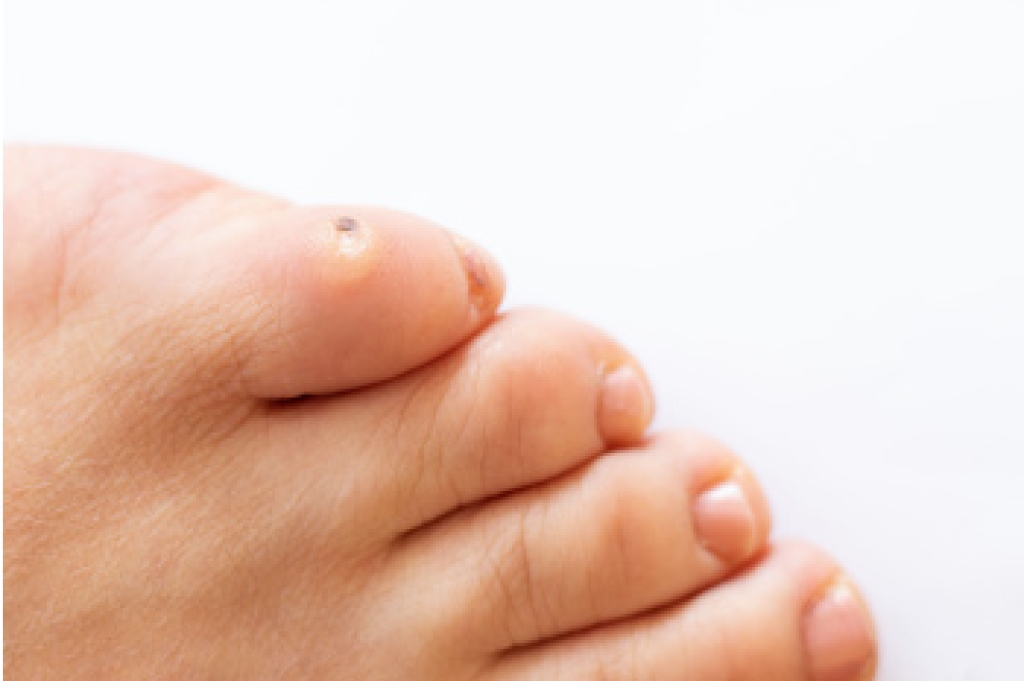
Why Corns Develop on Feet and Toes

Corns are thick areas of skin that form where repeated pressure or rubbing affects the foot. They develop on the top or side of toes, between toes, or on weight-bearing areas of the sole. A corn has a firm central core that presses into deeper skin and causes pain. Hard corns tend to be dry and yellowish. Soft corns between the toes look whitish because moisture keeps them flexible. Unlike a wider, flatter callus, a corn can feel like a thorn pressing into the foot. Discomfort is strongest while standing or walking.

Wearing shoes that are too tight can squeeze the toes and create repeated friction. Loose shoes can let the foot slide and rub against the inside. Hammertoes, bunions, and other changes in foot shape can create pressure points near bones. Dry skin can encourage thickening. People with reduced feeling in their feet may not notice a corn until the skin becomes damaged. This is especially concerning for patients with diabetes, poor circulation, or nerve problems. A podiatrist can examine the area and distinguish a corn from a callus, plantar wart, or other skin problem.

Treatment begins by finding and reducing the source of pressure. The podiatrist can carefully remove thickened skin and the dense core without harming healthy tissue. Treatment includes checking foot structure, toe position, and shoe fit. Padding or custom orthotics can redistribute pressure and protect the affected spot. Wider shoes with ample toe room can prevent continued rubbing. When a foot deformity repeatedly causes corns, the podiatrist can discuss treatment options. Surgery is considered only when a structural problem causes lasting symptoms that do not improve with conservative care. Treatment from a podiatrist is especially important when a corn is red, draining, or surrounded by broken skin. If you have a painful corn on your foot, it is suggested that you schedule an appointment with a podiatrist for effective relief and treatment solutions.

Corns can make walking very painful and should be treated immediately. If you have questions regarding your feet and ankles, contact Howard Kimmel, DPM of Buckeye Foot Care. Our doctor will treat your foot and ankle needs.

Corns: What Are They? And How Do You Get Rid of Them?
Corns are thickened areas on the skin that can become painful. They are caused by excessive pressure and friction on the skin. Corns press into the deeper layers of the skin and are usually round in shape.

Ways to Prevent Corns
There are many ways to get rid of painful corns such as:

  • Wearing properly fitting shoes that have been measured by a professional
  • Wearing shoes that are not sharply pointed or have high heels
  • Wearing only shoes that offer support

Treating Corns

Although most corns slowly disappear when the friction or pressure stops, this isn’t always the case. Consult with your podiatrist to determine the best treatment option for your case of corns.

If you have any questions, please feel free to contact one of our offices located in Brook Park and Willoughby Hills, OH . We offer the newest diagnostic and treatment technologies for all your foot care needs.

Read more about Everything You Need to Know About Corns

A Bunionette Explained

A bunionette, also called a tailor’s bunion, is a bony prominence that develops along the outer edge of the foot at the base of the little toe. It occurs when the fifth metatarsal bone shifts outward or the little toe angles inward, creating a noticeable bump. Symptoms include redness, swelling, and pain while wearing shoes. Some people experience tenderness while walking or standing for extended periods. Although a bunionette may develop slowly, friction and pressure make the area increasingly uncomfortable.

Bunionettes develop because of intrinsic and extrinsic factors. Intrinsic causes involve the structure of the foot itself, including inherited bone shape, abnormal alignment, and differences in how the foot bears weight. These structural features may increase pressure along the outside of the little toe. Extrinsic causes come from outside the body, particularly footwear that squeezes the toes or rubs against the bony prominence. Narrow shoes and high heels can worsen existing irritation by forcing the foot forward. People with a family history of bunionettes or foot alignment problems may be at greater risk.


The location of a bunionette makes it especially sensitive to shoe pressure. The outer forefoot often rubs against the shoe, leading to thickened skin or a painful corn. Symptoms may become more noticeable during exercise or after spending hours on your feet. Certain foot shapes increase the likelihood of developing this condition. Wearing poorly fitting footwear may accelerate discomfort. Choosing shoes with a wide toe box can reduce pressure and help protect the affected area.


A podiatrist examines your foot, assesses bone alignment, and uses X-rays when needed to determine the severity of the bunionette. Treatment options include wider shoes, protective padding, or medication to ease inflammation. Severe cases that do not improve with conservative care may require surgery. If you have a bunionette that is causing pain, it is suggested that you consult a podiatrist for an accurate diagnosis and appropriate treatment.

If you are suffering from bunion pain, contact Howard Kimmel, DPM of Buckeye Foot Care. Our doctor can provide the care you need to keep you pain-free and on your feet.

What Is a Bunion?

Bunions are painful bony bumps that usually develop on the inside of the foot at the joint of the big toe. As the deformity increases over time, it may become painful to walk and wear shoes. Women are more likely to exacerbate existing bunions since they often wear tight, narrow shoes that shift their toes together. Bunion pain can be relieved by wearing wider shoes with enough room for the toes.

Causes

  • Genetics – some people inherit feet that are more prone to bunion development
  • Inflammatory Conditions - rheumatoid arthritis and polio may cause bunion development

Symptoms

  • Redness and inflammation
  • Pain and tenderness
  • Callus or corns on the bump
  • Restricted motion in the big toe

In order to diagnose your bunion, your podiatrist may ask about your medical history, symptoms, and general health. Your doctor might also order an x-ray to take a closer look at your feet. Nonsurgical treatment options include orthotics, padding, icing, changes in footwear, and medication. If nonsurgical treatments don’t alleviate your bunion pain, surgery may be necessary.

If you have any questions, please feel free to contact one of our offices located in Brook Park and Willoughby Hills, OH . We offer the newest diagnostic and treatment technologies for all your foot care needs.

Read more about Bunions

Walking Abnormalities and Gait Changes

A walking abnormality means a person does not walk with their usual pattern. This pattern is called gait. Changes in gait can develop slowly after an injury or health problem develops. Symptoms include limping, uneven steps, or dragging a foot. Foot pain can also alter walking. Arthritis may cause stiffness and discomfort that changes how pressure moves through the feet and ankles. Foot deformities, including bunions, hammertoes, and flat feet, can affect normal gait.

There are several types of gait abnormalities, and each can look different. A spastic gait may involve stiff leg movements and limited flexibility. A scissoring gait causes the legs to cross toward the middle while walking. A propulsive gait often includes a forward-leaning posture with short steps. Limping may also occur. Risk factors include arthritis, nerve problems, and poor footwear. Age-related changes may also affect balance.


A podiatrist can assess an abnormal gait by reviewing symptoms, examining the feet and ankles, and watching how a person walks. The evaluation may include checking joint movement, muscle strength, foot structure, and tenderness. X-rays or other imaging tests may be recommended when arthritis, an injury, or a deformity needs evaluation. Treatment depends on the underlying cause. A podiatrist may recommend wearing supportive footwear or activity changes. Care may also focus on reducing pain and improving foot alignment.


Addressing a gait abnormality can help protect the feet from added stress. Early care from a podiatrist reduces the chance of developing pain in the ankles, knees, or lower back. Because an unusual walking pattern can have several causes, identifying the source is an important first step. A podiatrist can create a treatment plan based on your needs. If you have a gait abnormality and walking becomes painful, it is suggested that you consult a podiatrist for relief and management solutions.

If you have any concerns about your feet, contact Howard Kimmel, DPM from Buckeye Foot Care. Our doctor can provide the care you need to keep you pain-free and on your feet.

Biomechanics in Podiatry

Podiatric biomechanics is a particular sector of specialty podiatry with licensed practitioners who are trained to diagnose and treat conditions affecting the foot, ankle and lower leg. Biomechanics deals with the forces that act against the body, causing an interference with the biological structures. It focuses on the movement of the ankle, the foot and the forces that interact with them.

A History of Biomechanics

  • Biomechanics dates back to the BC era in Egypt where evidence of professional foot care has been recorded.
  • In 1974, biomechanics gained a higher profile from the studies of Merton Root, who claimed that by changing or controlling the forces between the ankle and the foot, corrections or conditions could be implemented to gain strength and coordination in the area.

Modern technological improvements are based on past theories and therapeutic processes that provide a better understanding of podiatric concepts for biomechanics. Computers can provide accurate information about the forces and patterns of the feet and lower legs.

Understanding biomechanics of the feet can help improve and eliminate pain, stopping further stress to the foot.

If you have any questions please feel free to contact one of our offices located in Brook Park and Willoughby Hills, OH . We offer the newest diagnostic and treatment technologies for all your foot and ankle needs.

Read more about The Importance of Biomechanics in Podiatry

Connect With Us

scroll to top