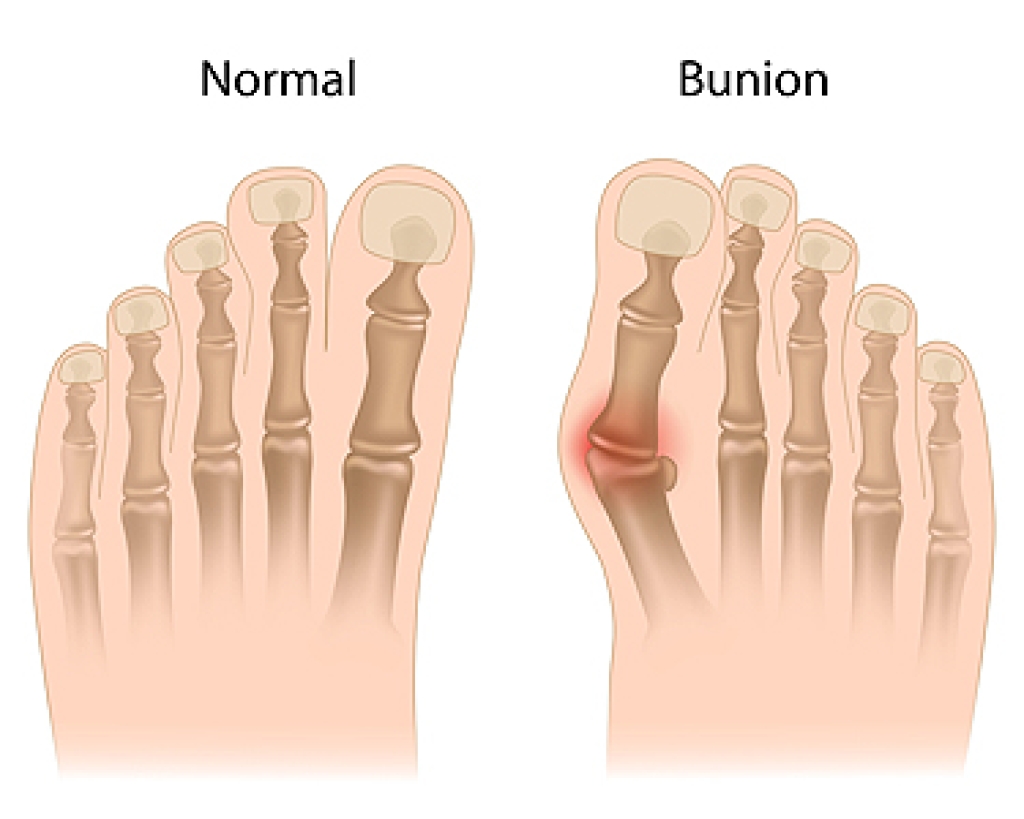
What to Know About Bunions

A bunion, or hallux valgus, is a common foot ailment where a bony bump occurs on the joint of a big toe when bones on the top part of the foot move out of place. The pressure causes the tip of the big toe to be pulled toward the smaller toes and forces the joint to remain stuck. Bunions can develop from wearing tight or narrow shoes or having an abnormal foot shape, a pre-existing medical condition (like arthritis), or a foot deformity. Bunionettes, or smaller bunions, might form on the joint of a smaller toe.  Elderly people and women are more apt to get bunions. They can occur on one or both feet. Bunions can be painful, the joint might get stiff and swollen, and the skin may get sore and red. Prolonged standing might exacerbate the pain of a bunion. If left untreated, bunions can get worse over time, and it might become difficult to walk. Bunion pads, well-fitted shoes, or toe spacers might help. In severe cases, bunion surgery – a bunionectomy – might be called for. If you have a bunion, it is suggested that you see a podiatrist who can recommend the appropriate treatment for you.

If you are suffering from bunion pain, contact Howard Kimmel, DPM of Buckeye Foot Care. Our doctor can provide the care you need to keep you pain-free and on your feet.

What Is a Bunion?

Bunions are painful bony bumps that usually develop on the inside of the foot at the joint of the big toe. As the deformity increases over time, it may become painful to walk and wear shoes. Women are more likely to exacerbate existing bunions since they often wear tight, narrow shoes that shift their toes together. Bunion pain can be relieved by wearing wider shoes with enough room for the toes.

Causes

  • Genetics – some people inherit feet that are more prone to bunion development
  • Inflammatory Conditions - rheumatoid arthritis and polio may cause bunion development

Symptoms

  • Redness and inflammation
  • Pain and tenderness
  • Callus or corns on the bump
  • Restricted motion in the big toe

In order to diagnose your bunion, your podiatrist may ask about your medical history, symptoms, and general health. Your doctor might also order an x-ray to take a closer look at your feet. Nonsurgical treatment options include orthotics, padding, icing, changes in footwear, and medication. If nonsurgical treatments don’t alleviate your bunion pain, surgery may be necessary.

If you have any questions, please feel free to contact one of our offices located in Brook Park and Willoughby Hills, OH . We offer the newest diagnostic and treatment technologies for all your foot care needs.
Read more about Bunions

What You Can Do About a Hammertoe

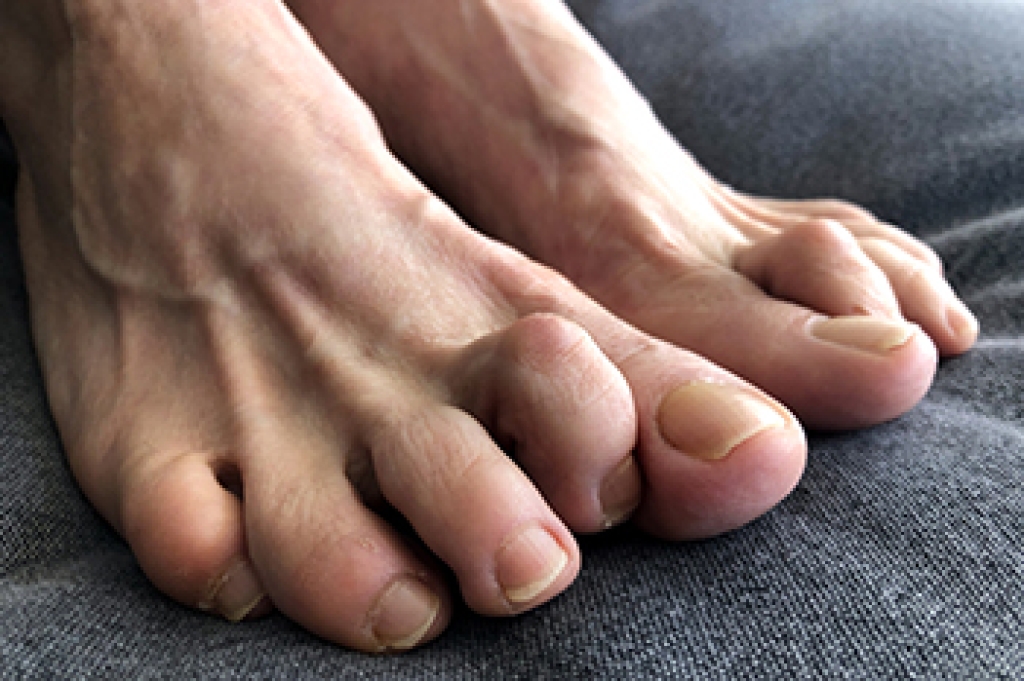
A hammertoe is a toe deformity where the 2nd, 3rd, 4th and/or 5th toe(s) bend downward at the middle joint and look like little hammers. Afflicted toes might also develop corns, calluses, and open sores due to rubbing or irritation from walking or running. Wearing shoes can be painful for those who have hammertoes and inflammation, redness, and/or a burning sensation may be felt in the toe area. Reasons hammertoes develop include wearing shoes that do not fit properly, usually those that push the toes together into a tight toe box. The toes will tighten when repeatedly bent into unnatural positions and lose their ability to stretch out. Sometimes hammertoes can occur from a muscle/tendon imbalance that leaves the toes pointing down due to structural changes in the foot that develop over a long period of time. Less often, a hammertoe results from an earlier injury or congenital defect. With early intervention, hammertoes can often be corrected with minimal treatment. Left untreated, a hammertoe can become permanent, and surgery may be required to reposition it. Treatment includes wearing comfortable, properly fitting shoes with a wide toe box, stretching feet and toes to keep muscles flexible, and wearing pads or orthotics. Further intervention, including surgery might be needed. If you suffer from a hammertoe, see a podiatrist who can properly diagnose the severity of the condition and provide correct treatment options for you.

Hammertoes can be a painful condition to live with. For more information, contact Howard Kimmel, DPM of Buckeye Foot Care. Our doctor will answer any of your foot- and ankle-related questions.

Hammertoe

Hammertoe is a foot deformity that occurs due to an imbalance in the muscles, tendons, or ligaments that normally hold the toe straight. It can be caused by the type of shoes you wear, your foot structure, trauma, and certain disease processes.

Symptoms

  • Painful and/or difficult toe movement
  • Swelling
  • Joint stiffness
  • Calluses/Corns
  • Physical deformity

Risk Factors

  • Age – The risk of hammertoe increases with age
  • Sex – Women are more likely to have hammertoe compared to men
  • Toe Length – You are more likely to develop hammertoe if your second toe is longer than your big toe
  • Certain Diseases – Arthritis and diabetes may make you more likely to develop hammertoe

Treatment

If you have hammertoe, you should change into a more comfortable shoe that provides enough room for your toes. Exercises such as picking up marbles may strengthen and stretch your toe muscles. Nevertheless, it is important to seek assistance from a podiatrist in order to determine the severity of your hammertoe and see which treatment option will work best for you.

If you have any questions, please feel free to contact one of our offices located in Brook Park and Willoughby Hills, OH . We offer the newest diagnostic and treatment technologies for all your foot care needs.
Read more about What Are Hammertoes?

What Is Ledderhose Disease?

There is a rare foot condition that is known as Ledderhose disease, which causes hard lumps to develop on the bottom of the feet. It is a result of a build up of connective tissue, and can cause pain and discomfort. The lumps are generally benign, and can be related to other connective tissue diseases. Additional symptoms include foot and ankle pain, tight skin, and a sensation of pins and needles. There may be existing conditions that lead to Ledderhose disease, including chronic liver disease, prior foot injuries, and diabetes. Patients with a long history of alcohol use may experience symptoms of this condition. Mild relief may be found when soft shoe inserts are worn to provide adequate padding for the bumps. It can be beneficial to perform mild stretches, and many patients find it can help to get regular foot massages. If you have any of these symptoms, it is suggested that you consult with a podiatrist for a proper diagnosis and treatment options that may involve surgery for permanent relief.

Some foot conditions may require additional professional care. If you have any concerns, contact Howard Kimmel, DPM of Buckeye Foot Care. Our doctor can provide the care you need to keep you pain-free and on your feet.

Rare Foot Conditions

The majority of foot conditions are common and can be treated by a podiatrist.  Standard diagnostic procedures are generally used to identify specific conditions and treatment can be rendered. A podiatrist also treats rare foot conditions which can be difficult to diagnose and may need extra attention and care. 

There are many rare foot conditions that can affect children. Some of these can include:

  • Freiberg’s disease
  • Kohler’s disease
  • Maffucci syndrome

Freiberg’s disease - This can be seen as a deterioration and flattening of a metatarsal bone that exists in the ball of the foot. It typically affects pre-teen and teenage girls, but can affect anyone at any age. Symptoms that can accompany this can be swelling, stiffness, and the patient may limp. 

Kohler’s disease - This often targets the bone in the arch of the foot and affects younger boys. It can lead to an interruption of the blood supply which ultimately can lead to bone deterioration. The patient may limp or experience tenderness, swelling, and redness.

Maffucci syndrome - This affects the long bones in a child’s foot leading to the development of abnormal bone lesions. They are benign growths and typically develop in early childhood and the bones may be susceptible to breaking. 

A podiatrist can properly diagnose and treat all types of rare foot conditions. If your child is affected by any of these symptoms or conditions, please don’t hesitate to call our office so the correct treatment method can begin.

If you have any questions, please feel free to contact one of our offices located in Brook Park and Willoughby Hills, OH . We offer the newest diagnostic and treatment technologies for all your foot care needs.

Read more about Rare Foot Conditions

Treating Toenail Fungus

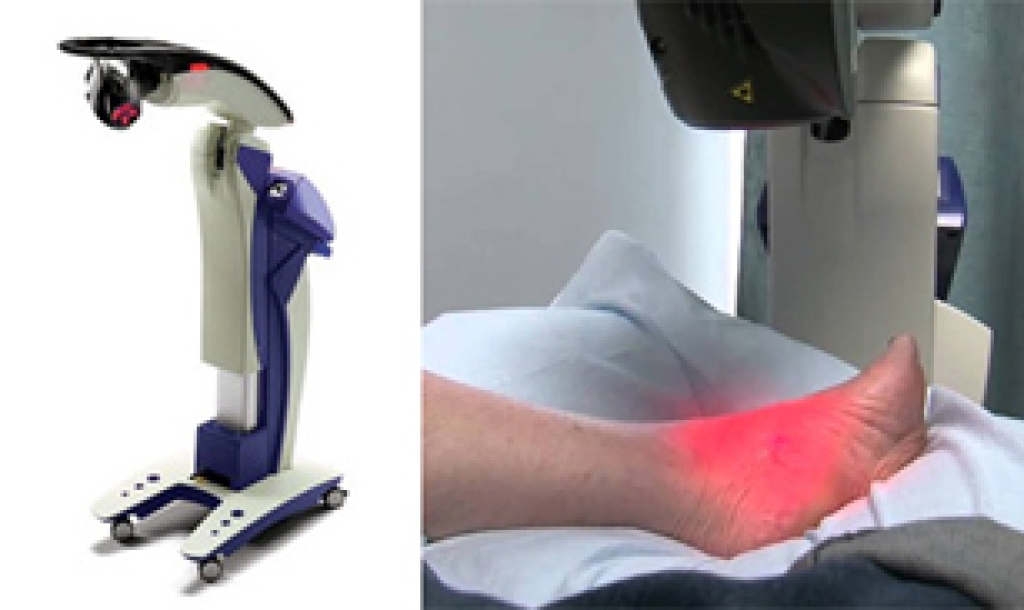
People who are infected with toenail fungus can be embarrassed to wear flip-flops and sandals in the warmer months. It is an unsightly foot condition that leaves the nails yellowed and thickened and in severe cases, brittle. Additionally, the toes can itch or turn black, and may often be accompanied by athlete’s foot. There are a variety of remedies for toenail fungus, including laser treatment. This consists of using a laser to target and destroy the nail fungus without damaging the surrounding skin or nail. Research has indicated there is generally no risk, and most patients do not have side effects. The 10-minute per toenail sessions are typically painless and have a high percentage rate for successful fungal removal. If you have toenail fungus and are interested in this type of treatment, it is strongly advised that you consult with a podiatrist.

Laser treatment can be an effective way to get rid of toenail fungus. If you have any questions about laser treatment, consult with Howard Kimmel, DPM from Buckeye Foot Care. Our doctor will assess your condition and provide you with quality treatment for fungal nails.

What Are Toenail Fungal Infections?

Onychomycosis, or fungal infection of the nail, is a relatively common and non-serious condition. Around 10 percent of U.S. citizens are afflicted with fungal nails. Common forms of fungus that infect the nail include dermatophytes, yeasts, and molds.

Symptoms of Toenail Fungal Infections Include:

  • Nail thickening
  • Brittleness of the nail
  • Discoloration of the nail

Diagnosis for Fungal Nails

Fungal infections are diagnosed by fungal culture and microscopy. This will rule out any other conditions such as nail trauma, psoriasis, lichen planus, and onychogryphosis.

What Is Laser Treatment?

Laser treatment is a non-invasive, safe, quick, and painless procedure that uses the heat from a laser to kill fungus in the nail. Each infected nail is targeted with a laser for several minutes. The treatment is usually utilized several different times over a select period. During this time, a podiatrist will keep an eye on the infection.

If you have any questions, please feel free to contact one of our offices located in Brook Park and Willoughby Hills, OH . We offer the newest diagnostic and treatment technologies for all your foot care needs.

Read more about Laser Treatment for Fungal Nails

Why Live with Pain and Numbness in Your Feet?

Suffering from this type of pain? You may have the foot condition known as Morton's neuroma. Morton's neuroma may develop as a result of ill-fitting footwear and existing foot deformities. We can help.

Connect With Us

scroll to top