Connect With Us
Blog
Items filtered by date: April 2026
Tuesday, 14 April 2026 00:00
Understanding Bicycle Spoke Injuries in Children

Bicycle spoke injuries in children occur when a child’s foot or leg becomes caught in the rotating spokes of a bicycle wheel, often leading to trauma of the ankle and surrounding tissues. This type of entrapment can cause fractures, soft tissue damage, and significant pain. Symptoms include swelling, bruising, difficulty bearing weight, and visible injury to the ankle or lower leg. Risk factors include riding without proper foot protection, loose seating positions, and lack of protective guards on bicycles. These injuries can be serious and require prompt evaluation. A podiatrist can assess the extent of damage, provide appropriate treatment, and guide recovery to restore function. If your child has symptoms of a fractured ankle from bicycling riding, it is suggested that you consult a podiatrist who can offer appropriate relief and treatment solutions.
Sports related foot and ankle injuries require proper treatment before players can go back to their regular routines. For more information, contact Howard Kimmel, DPM of Buckeye Foot Care. Our doctor can provide the care you need to keep you pain-free and on your feet.
Sports Related Foot and Ankle Injuries
Foot and ankle injuries are a common occurrence when it comes to athletes of any sport. While many athletes dismiss the initial aches and pains, the truth is that ignoring potential foot and ankle injuries can lead to serious problems. As athletes continue to place pressure and strain the area further, a mild injury can turn into something as serious as a rupture and may lead to a permanent disability. There are many factors that contribute to sports related foot and ankle injuries, which include failure to warm up properly, not providing support or wearing bad footwear. Common injuries and conditions athletes face, including:
- Plantar Fasciitis
- Achilles Tendinitis
- Achilles Tendon Rupture
- Ankle Sprains
Sports related injuries are commonly treated using the RICE method. This includes rest, applying ice to the injured area, compression and elevating the ankle. More serious sprains and injuries may require surgery, which could include arthroscopic and reconstructive surgery. Rehabilitation and therapy may also be required in order to get any recovering athlete to become fully functional again. Any unusual aches and pains an athlete sustains must be evaluated by a licensed, reputable medical professional.
If you have any questions please contact one of our offices located in Brook Park and Willoughby Hills, OH . We offer the newest diagnostic and treatment technologies for all your foot and ankle needs.
Tuesday, 07 April 2026 00:00
Managing Achilles Tendon Pain
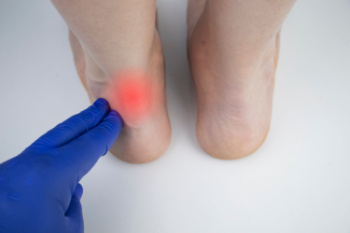
Pain in the back of the heel or lower leg may be linked to irritation of the Achilles tendon, often caused by overuse, tight muscles, or sudden increases in activity. Early care focuses on reducing strain. This may include modifying activity, avoiding hills or high-impact movement, and wearing supportive footwear. Gentle stretching of the calf muscles may improve flexibility. A structured exercise program is often recommended to strengthen the tendon and improve function, over time. In some cases, heel lifts or custom inserts may reduce tension during walking. Recovery can take time, and consistent care is important. If tendon pain continues or worsens, it is suggested that you see a podiatrist for a full evaluation and a treatment plan tailored to your needs.
Achilles tendon injuries need immediate attention to avoid future complications. If you have any concerns, contact Howard Kimmel, DPM of Buckeye Foot Care. Our doctor can provide the care you need to keep you pain-free and on your feet.
What Is the Achilles Tendon?
The Achilles tendon is a tendon that connects the lower leg muscles and calf to the heel of the foot. It is the strongest tendon in the human body and is essential for making movement possible. Because this tendon is such an integral part of the body, any injuries to it can create immense difficulties and should immediately be presented to a doctor.
What Are the Symptoms of an Achilles Tendon Injury?
There are various types of injuries that can affect the Achilles tendon. The two most common injuries are Achilles tendinitis and ruptures of the tendon.
Achilles Tendinitis Symptoms
- Inflammation
- Dull to severe pain
- Increased blood flow to the tendon
- Thickening of the tendon
Rupture Symptoms
- Extreme pain and swelling in the foot
- Total immobility
Treatment and Prevention
Achilles tendon injuries are diagnosed by a thorough physical evaluation, which can include an MRI. Treatment involves rest, physical therapy, and in some cases, surgery. However, various preventative measures can be taken to avoid these injuries, such as:
- Thorough stretching of the tendon before and after exercise
- Strengthening exercises like calf raises, squats, leg curls, leg extensions, leg raises, lunges, and leg presses
If you have any questions please feel free to contact one of our offices located in Brook Park and Willoughby Hills, OH . We offer the newest diagnostic tools and technology to treat your foot and ankle needs.
Wednesday, 01 April 2026 00:00
Heel Pain Can Be Treated!

Do you suffer from heel pain when you get up in the morning? If so, you should seek professional help and have a proper diagnosis performed. Heel pain can be caused by several different foot-related conditions.
